

youth is a mindset
on our obsession with staying young, and how to outgrow it

The other day, I found myself in one of those mirror vortexes, where I temporarily left time and space and was sucked into another realm, completely absorbed by every single inch of my body, thinking, when did I get so fucking old?
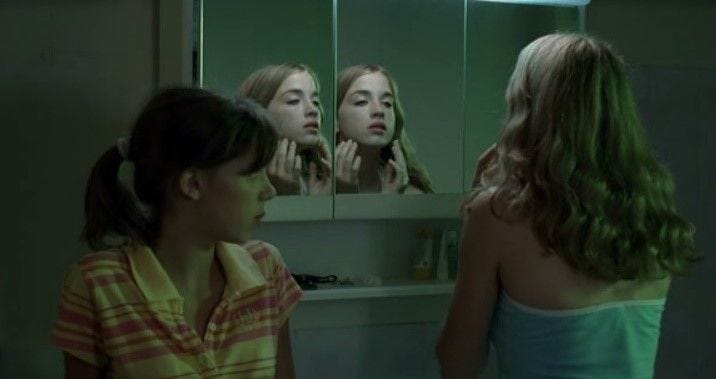
I’m 33, for reference, and it seems like overnight, I’ve aged about 10 years. Have I always had these lines around my eyes? When did 1 grey hair (plucked weekly) turn into 30? And when did I get jowls!?
Now before anyone starts with the “omg but 33 is so young” piece, please let me remind you that this is the oldest that I have ever been. So yes, 33 is old for a 33-year-old because it’s the oldest I have ever known.
Come to think of it, I don’t think there was ever a point in my life that I felt young, per se. Sure, I have felt young-er than others, in the context of number of years in existence on Earth, comparatively. I understand that 33 is only 33% of my total life (yes I plan on living to 100). I look around and see people who are older than me, and I comprehend that there is an age difference. I am younger than them. But I am not young, and I never have been. Not consciously, at least.
Up until the age of about 25, all I wanted to do was grow up. Being young just didn’t sit right with me; it felt powerless and lame. I wanted to be an independent and sophisticated adult with lots of independent and sophisticated adult things to do. I wanted my own cool apartment and cool friends and cool life. Now that I’m here, what I want is for time to stop immediately. I cling desperately to the past, left with an incessant longing for a girlhood that feels unfinished. Very “I’m not a girl, not yet a woman”, à la Britney Spears.
In turn, I fear that I will feel old for the rest of my life. I messed up my childhood and forgot to be young and now I have like 50 grey hairs. And I know I’m not alone. Most women I know would give anything to go back to their 20s, and if you don’t agree then you’re probably lying.
The mirror incident occurred after a recent GNO, where Botox and boob jobs were main topics of interest. I initially brushed off what my friends were saying, put them down for caring so much about how they looked. “We should embrace getting older... why would you want to look like a teenager?” Secretly, I couldn't wait to get home to pull out the magnifying glass on my own state of affairs.
We all do it, we don’t want to admit it, we try to hide it, but here we are. Hating our bodies for doing what they are supposed to be doing: getting older.
And it’s not just the physicality that we’re after. Sure, having perfectly smooth skin and perky tits is great and all. We all got around one day and decided to adopt this as our common belief system (thank you, patriarchy). We dedicate so much of our lives to curating our physical appearance. It’s exhausting—so why do we do it?
Because looking young is a marker of our fundamental social worth. Being young is hot.
But it’s more complex than that. I believe that our fixation on youthfulness is rooted in a deep desire to live more freely, more romantically. There is a certain associated feeling that I can’t perfectly put into words, but that I very much know to be true. What does it mean to be young? What is this feeling we are chasing after but for some reason can never catch? And why are we trying to return to a time that we once couldn’t wait to escape?
The tension with age spreads in both directions. Not only are we yearning for our younger years, we are also afraid of getting older. It’s not a fear of death, per se, rather a fear of losing our identity as a valuable and worthy person in society. Youth is status, and losing it is one of the greatest threats to womankind.
So here, I’m left at a crossroads: go back or move forward. Do I try to get back this feeling of youth (whatever that means), or do I give up on the idea completely and accept the identity of an aging woman?
youth as pain
Being young is confusing. It comes with its own territory of insecurity, worry, and vulnerability. Our identities seem to be in an endless cycle of forming and unravelling, leaving us highly impressionable and, at many times, uncertain. We are figuring out who we are, who we aren’t, what we want, and what we absolutely do not. The decisions that we make seem so painfully important as though making the wrong one could have the potential to derail our existence entirely.
Everything is exaggerated. Every moment, every feeling. We do things that we end up regretting, we say things that we wish we could take back. We stay wrapped up in the drama of it all because the emotional tools we needed had not yet fully formed. Sometimes I catch myself overanalyzing the details of my younger years, and can’t help but wonder what my life would have been like had I known then what I know now.
No wonder it’s so difficult to appreciate what we have in the moment. We are constantly ruminating over the past, worrying about the future, and ultimately fixating too much on our external performance to ever feel a true sense of presence.
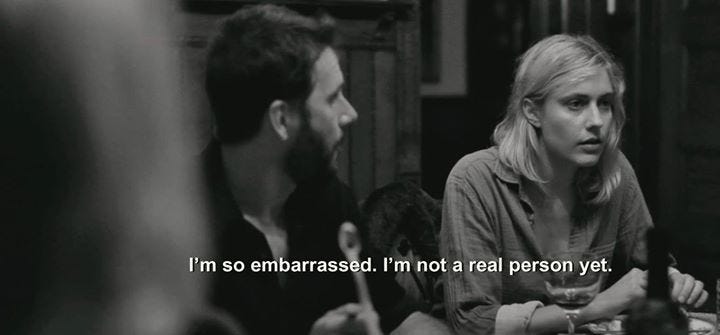
So if youth was so turbulent, why are we still so obsessed with it? What are we clinging onto or trying so desperately to get back? And what is it about aging that feels like such a threat?
There seems to be a huge disconnect between what we imagine youth to be, and what it actually is. Learning to bridge that gap could be the antidote we need.
youth as possibility
There is another side of the coin, the one that I, and so many others, feel like was missed.
Youth, at its core, is romance. It is joy and love and everything that feels good in the world. It is a time of intimacy.
When we are young, we are innocent. Life is mysterious, and we are navigating it with little moldable minds. Many of us haven’t yet experienced the full expressions of pain that come from heartbreak, loss, and grief. We are protected, living our lives behind a veil that promises endless possibilities. A blank page. Life is your oyster.
We are listened to, we are looked at, we are centred, and we are the main character. We are allowed to make mistakes because we aren’t expected to know any better. We are valuable and we matter. There’s no need to worry too much about growing up because it still seems so far away, and that brings a certain sense of peace and reassurance. We’ve got time.
Through film and literature, youth is often depicted in this way: whimsical and poetic. It is, in a word, precious. I think of films such as The Dreamers and Call Me By Your Name and can truly feel the emotions vicariously, cringing at so many awkward moments, yet ultimately longing for a simpler time where everything seems pure.
Time and time again, these portrayals of youth have us romanticizing an otherwise typically weird time in one’s life. Here, youth is reframed: chaos as excitement, impulsivity as carefree abandon, and awkwardness as something charming and sweet. Youth is beautiful, a time to be looked back on fondly, even if you went through some shit.
At first glance, it seems that I somehow missed that part of life. Was my life supposed to have felt like that too? A coming-of-age story where wrong decisions, bad outfits, and the woe of heartbreak are actually what make the story so beautiful? Because trust, that’s not how it felt. It couldn’t have—my mind was too focused on growing up.
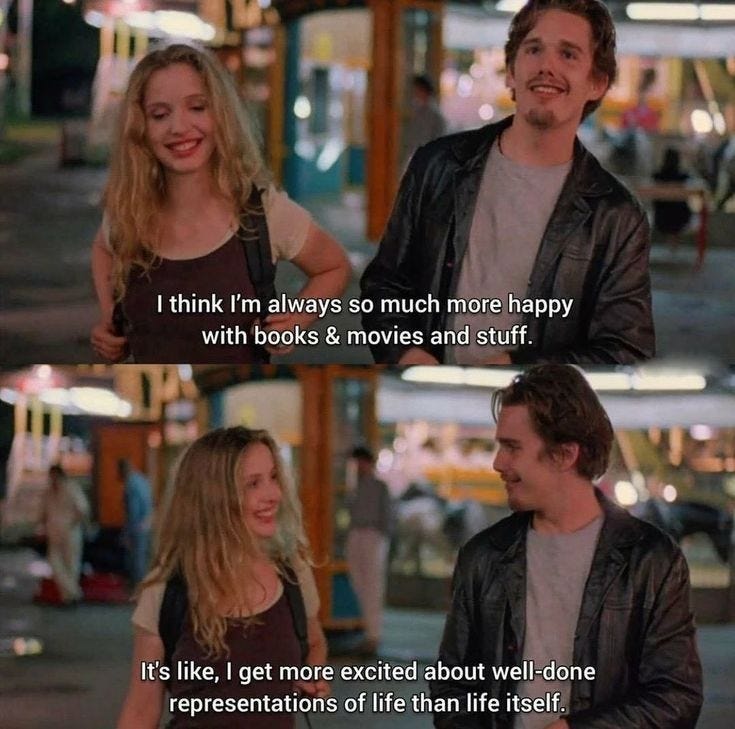
Now that I think back on it, my romantic drama storyline was there. I was the main character, and I had absolutely no idea. I was completely submerged in experiencing my youth in its totality that I couldn't ever appreciate it for what it was—perfectly imperfect. And wanting to move away from it—that’s just part of the deal. The tender pain is what makes it so precious.
Herein lies the timeless paradox: we are only able to appreciate what we have once it’s gone. The beauty comes later, when we finally understand it.
Although messy and uncomfortable, these years were formative. The relationships that we had, the good and the bad, were teachers. The jobs that demanded so much and paid so little, the lack of self-awareness, the unrequited love; they helped shape who we are today. While daunting in the moment, it really was a gentler time, and we yearn for that feeling of innocence.
We want our youth back in order to live more freely, more passionately, but this time, we’d do it with appreciation and compassion. Maybe we are clinging to the fantasy of being able to change a memory. But that desire is keeping us from moving forward.
rethinking age
I am still trying to understand what it really means to be young. I constantly search for opportunities to experience that lost sense of innocence, which feels like looking for your keys in a really deep, cluttered handbag. Impossible, infuriating, and a waste of time. Because, as I’m beginning to realize, being young cannot be willed. Feeling young must be exactly that—felt.
I look at my grey hairs and I am certain they don’t belong there. The lines beside my eyes don’t fit and the way my breasts hang about 2 cm lower than last year is not mine to claim. How did it happen so quickly? I don’t feel any different…
My mother always tells me that she can’t believe she’s in her 60s. She looks in the mirror and often doesn’t recognize herself, as if her body belongs to someone else. I can’t tell if I love or fear this idea. When I look at her, I see her not so much as a representation of a number, but as a woman with a soul. I see her young, in her excitement and joy and curiosity, and I see her old, with her wisdom and responsibility and care. She is both, yet she is neither.
I like to observe older women around me, notice their mannerisms, the way they move about the world, the lines on their faces and the spots on their hands. I can’t help but wonder what they were like in their youth. Do they look back on their years with a sense of nostalgia, longing for those moments of fragility and possibility? Or do they embrace this stage of their life with ease?
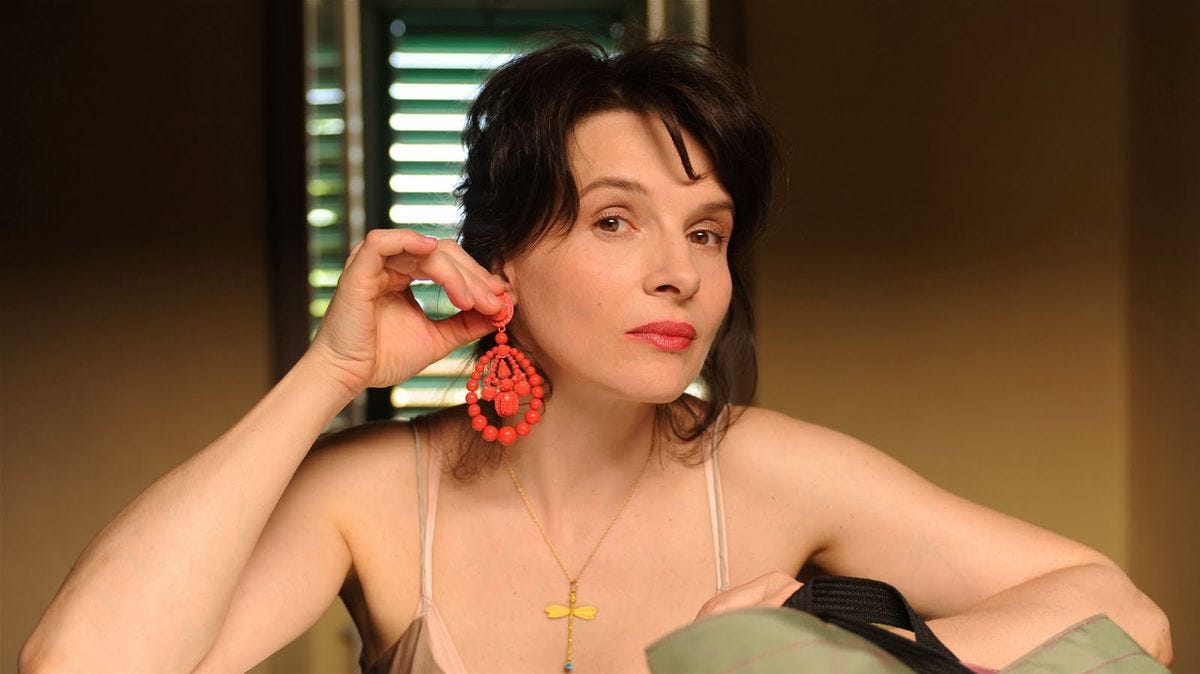
I have heard before that wanting to look young is shallow, but really, it’s not a surprising response given the culture that we live in, one that punishes women for time passing.
We can’t deny it—we’re going to get older. We are going to physically change in appearance no matter how many pilates classes, wellness fads, and injections we fill our days with. What remains completely in our control is where we direct our mindset. Our power lies in our perception.
By separating our worth from the desirability that comes with youth, we begin a powerful shift. Suddenly, we become freer, louder, less apologetic and ornamental, more appreciative and authentic. We worry less about clinging to the past and step confidently into the present.
Aging appears physically, but it also appears internally. Over time, we learn, grow, and develop. We shed limiting beliefs adopted in earlier years. We become more sure of ourselves. We gain wisdom that can only be inherited through years of lived experience. That in itself is desirable. That in itself is valuable.
age vs. identity
I once heard a concept that completely changed the way I thought about aging. It explains that while you are a version of yourself at the age you are now (obviously), you are also the you from the year before, and the year before that, and so on and so forth. Essentially, you carry all the versions of yourself at every single moment of your life up until this very point.
Stick with me on this one:
If this current version of ourselves is the newest one to date, are we actually the youngest we have ever been?
Maybe it’s a bit of a reach, but there is something noteworthy to say about how we relate to our identity. I think about how the 12-year-old in me has been around for years, but the 33-year-old only a few months. Those “younger” versions of me have experienced so much, and this “older” version now isn’t really older at all. She has more wisdom and experience than any other version, but cumulatively, they make her new and distinct. This specific shape has only just arrived.
From this point of view, do we ever really grow old? Or do we just grow onward, collecting little versions of ourselves along the way?
We need to change the narrative around aging, begin to see it as something beautiful and exciting. We need to raise its pedestal so that we are not blindly chasing some lost feeling of youth. Because if what we really want is, in fact, a feeling, then that feeling can be embodied at whatever chapter of life we’re presently in. It becomes attainable. That’s the magic of it all.
Reframing what it means to age invites gentleness and care rather than self-correction or “I should know/do better than this by now”. With more self-compassion, we may be able to move into a state of heightened awareness, more deliberate presence. That’s how we reactivate the romance, that’s how we feel youthful again.
Not only can we regain a feeling of youth, we can also begin to move forward into the next chapters of our lives, confidently and with appreciation, knowing that what we have been accumulating along the way has been building our sense of worth. It just takes a mindset shift.
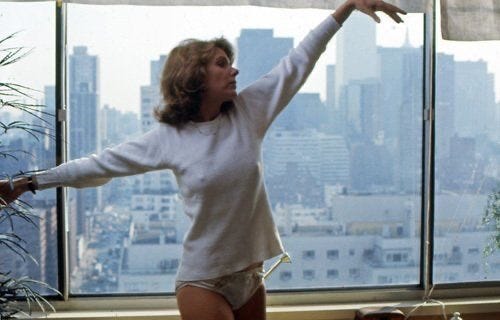
I think of the hours I have stood in that exact spot in front of the mirror, scrutinizing myself, my body. Not thin enough, not attractive enough, not whatever enough, and now, not young enough.
It’s exhausting.
I feel like I’ve wasted my time criticizing when I could have been living.
But when I look for long enough, I see someone else. She is 31, terrified and liberated. She is 25, heartbroken and passionate. She is 15, ashamed and enthralled. She is 6, scared and giddy. Both sides exist—they have to. Life is so multidimensional that it cannot be any other way. And that is what makes life so romantic. That’s the youth we are after. What we fail to realize is that we carry it with us through our lived experiences, and we will continue to carry it for the rest of our lives.
My physicality is an accumulation of my life experiences, a window into the deeper existence of self. It reads like a novel up until this very chapter of my life. Life shown through marks, scars, lines, and mannerisms; acquired through squinting, sunburns, laugher, and heartache. How could any of it be undesirable? It’s all me.
So in an attempt to appreciate what I have in the moment, maybe I can romanticize my life a little bit more, enough to release the judgment, the shame, the embarrassment that comes with doing my fucking best. Maybe I can learn to forgive myself for mistakes made and look at things with a sense of intrigue and reverie, as if I were watching a movie about a woman growing onward. Maybe I can come to appreciate those grey hairs because they bring with them a story.
So I choose to sit with the notion that whatever stage of life I am in, it is unquestionably the best one. There is, in fact, no other option. I choose to love my problems and my imperfections as they are, because perhaps one day I will look back on this very moment and kick myself for not appreciating it now.
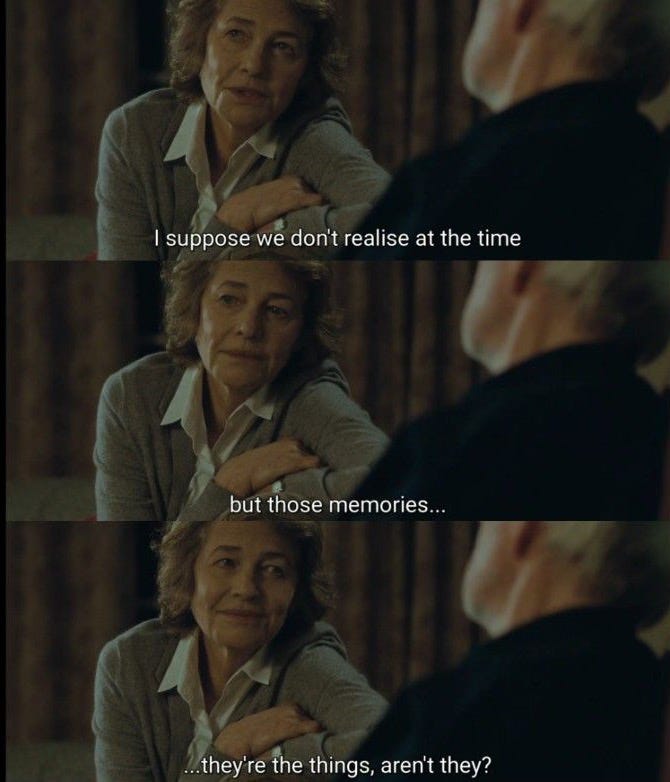
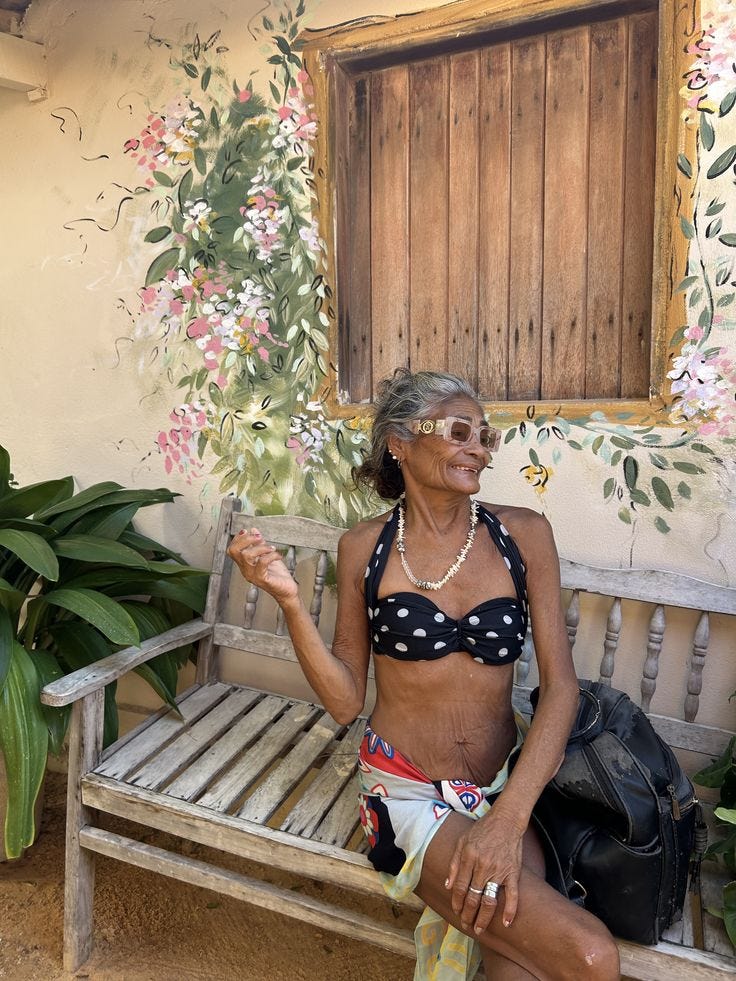
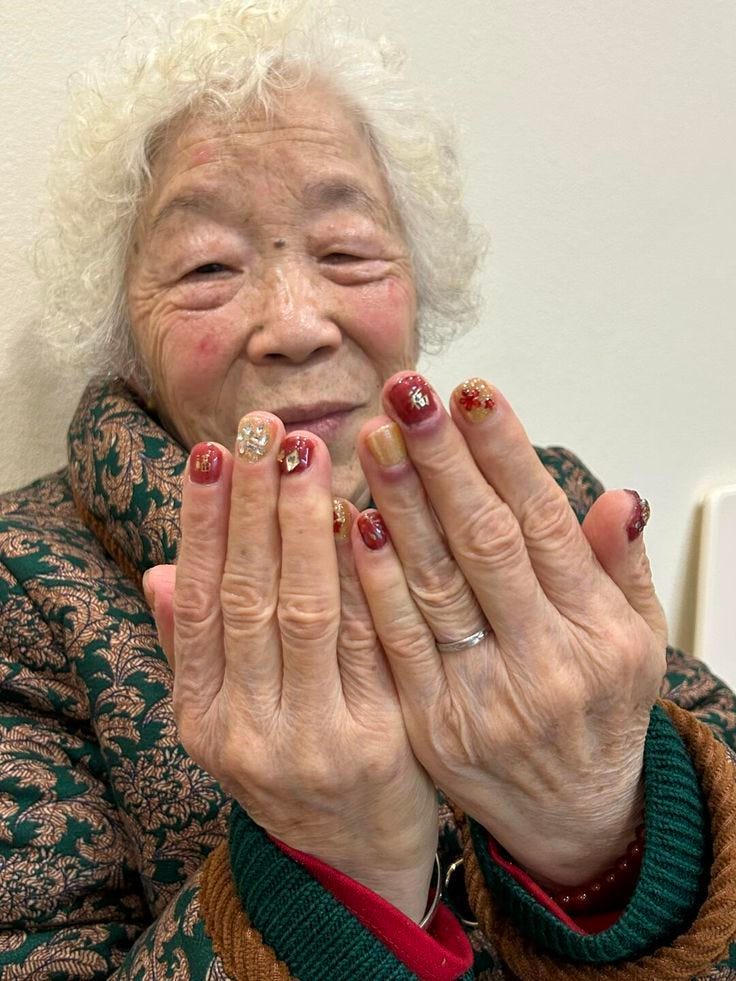
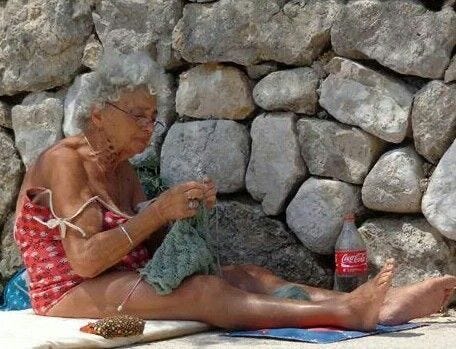
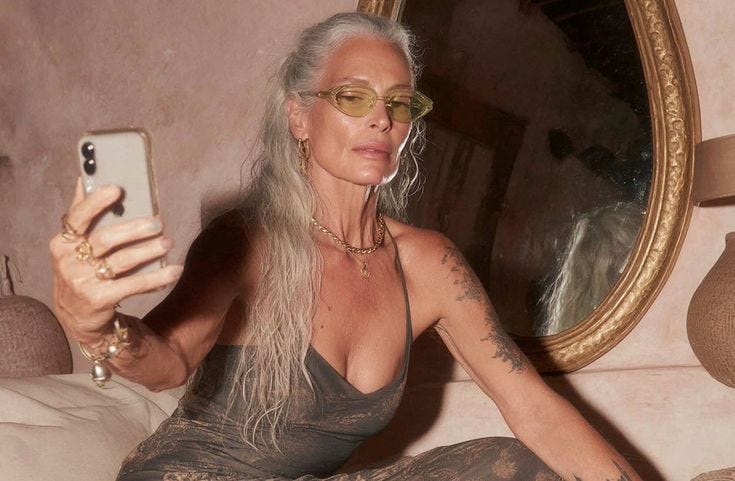
I’m going to finish off with some photos of very cool women who embody this sense of strength, femininity, and wildness that I strive to attain—the true essence of aging. They remind me that getting older is not something to avoid, rather, it’s something to step into with conviction. Youth is a mindset, age is just a number, and being a woman is fucking fabulous.
Goodbye x
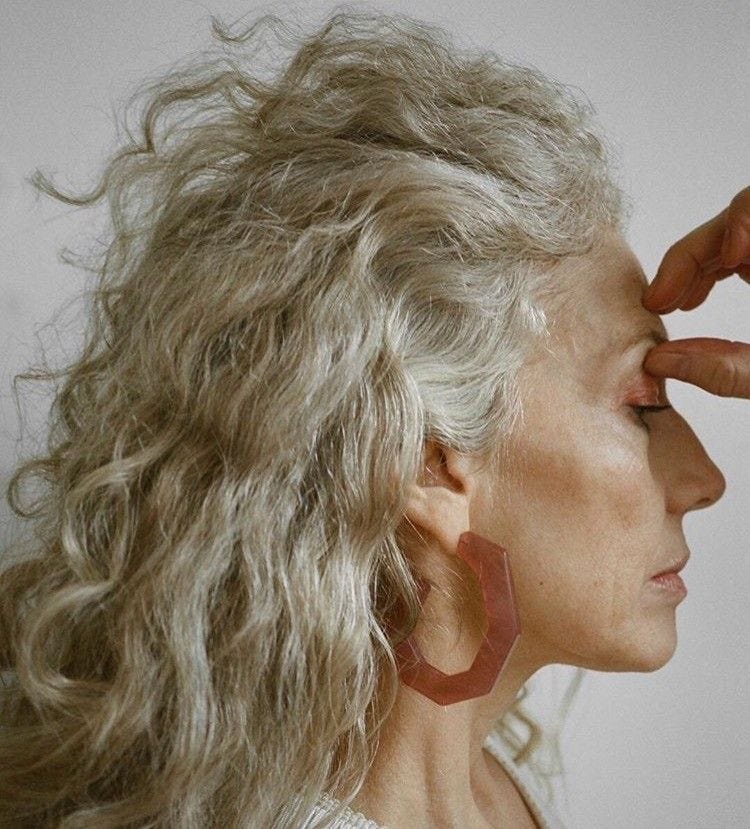
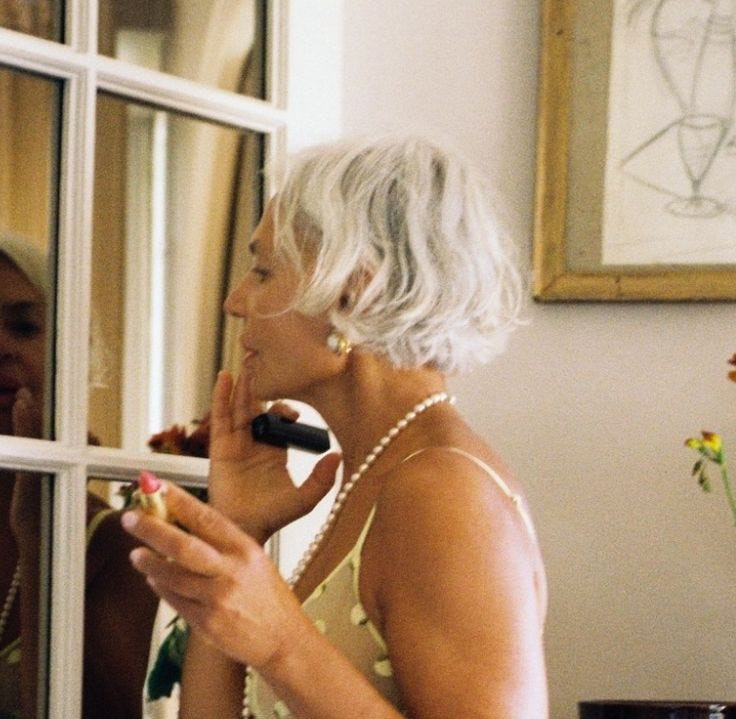
Thank you for reading IN SEASON
continue with your curiosity….
holistic hair health & the one thing that stopped my hair fallout
waiting for clarity is keeping you stuck
anger: the information messenger
If these reflections resonate with you and you’d like to support this space as it grows, consider becoming a free or paid subscriber.
I turned 33 this year and this piece hit everything I’ve been feeling and experiencing. Thanks for putting it out into the world ✨
The photos at the end are my new obsession <3